Top Indoor Games for Youth Groups: Energizing and Engaging Activities
The best indoor group games for youth clubs, summer camps, and classrooms that build teamwork, burn energy, and guarantee laughs.
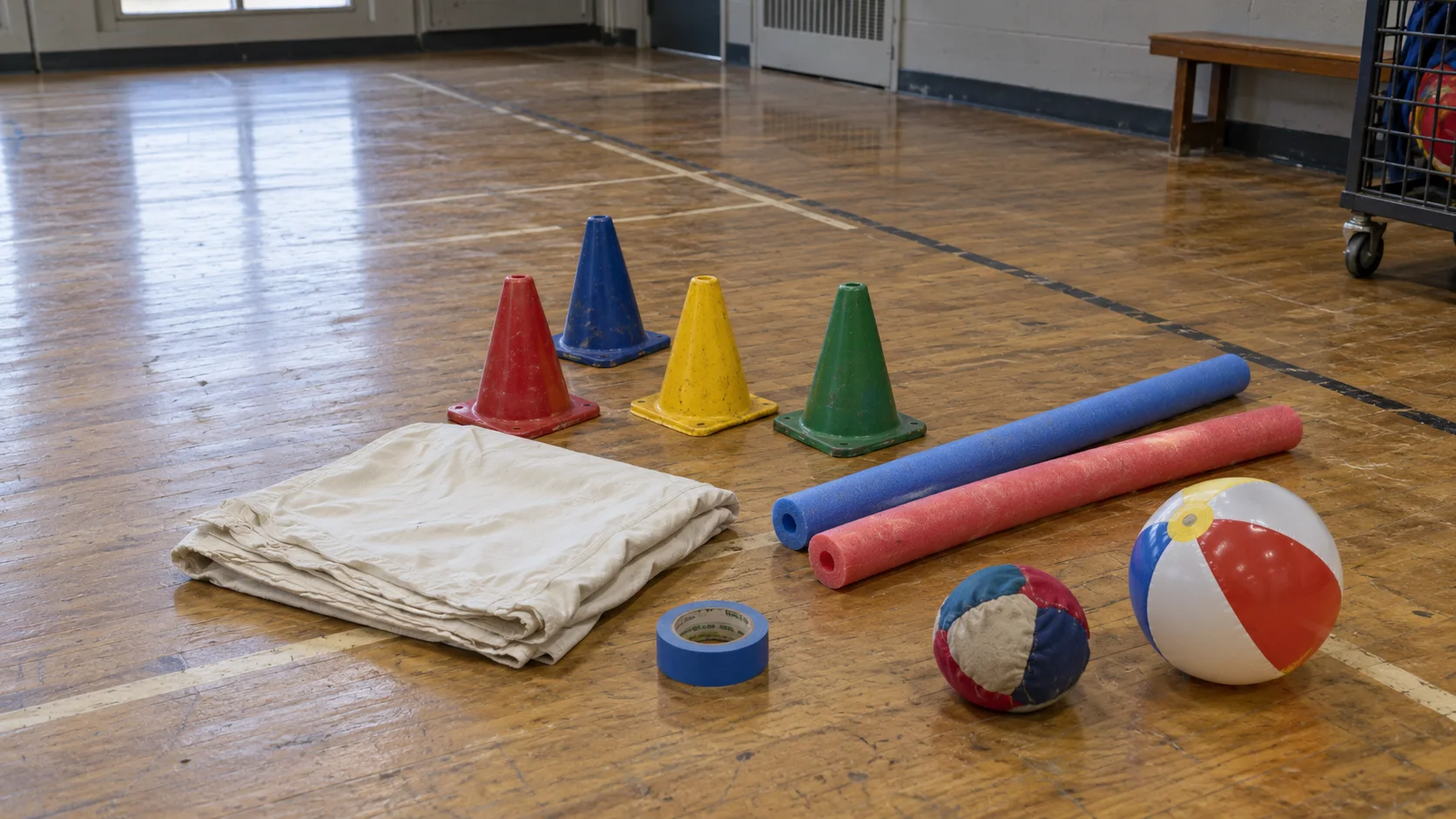
5 Energizing Indoor Games for Youth Groups
Bad weather and limited space do not have to turn a youth group session into an hour of sitting around. The best indoor games are easy to explain, keep most participants active and can be adjusted for different ages, abilities and group sizes.
The five activities below require little or no specialist equipment. Each game includes practical setup instructions, safety guidance and an inclusive alternative for participants who may not be comfortable with running, hiding or physical contact.
Quick Comparison
| Game | Recommended group | Time | Equipment | Energy |
|---|---|---|---|---|
| Four Corners | 8–40+ | 10–15 minutes | Four markers | Medium |
| Blanket Name Drop | 10–30 | 10–20 minutes | Opaque sheet | Low |
| Human Knot | 6–10 per group | 10–15 minutes | None | Medium |
| Sardines | 6–20 | 15–25 minutes | None | Medium |
| Balloon Gauntlet | 10–30 | 15–20 minutes | Soft balls and foam noodles | High |
For a very large youth group, divide participants into smaller teams and run two activities simultaneously. Rotating after ten or fifteen minutes prevents long waits.
Before You Begin
A quick room check makes every game safer and easier to manage:
- Move tables, loose cables and bags away from the playing area.
- Keep fire exits, doorways and walkways clear.
- Explain physical boundaries before starting.
- Tell participants that walking is always acceptable.
- Offer a no-contact or seated role without requiring an explanation.
- Make sure at least one leader can see the complete playing area.
- Stop the activity immediately if someone feels uncomfortable or unsafe.
Games should be adapted to the group in front of you. Age, mobility, sensory needs, room size and familiarity between participants all matter more than following a traditional rule exactly.
1. Four Corners
Four Corners is a quick decision-making game for groups of almost any size. Participants move between four marked areas while a caller tries to eliminate one corner at a time.
Setup
Place a cone, colored sheet of paper or visible marker in each corner. Assign each corner a number from one to four.
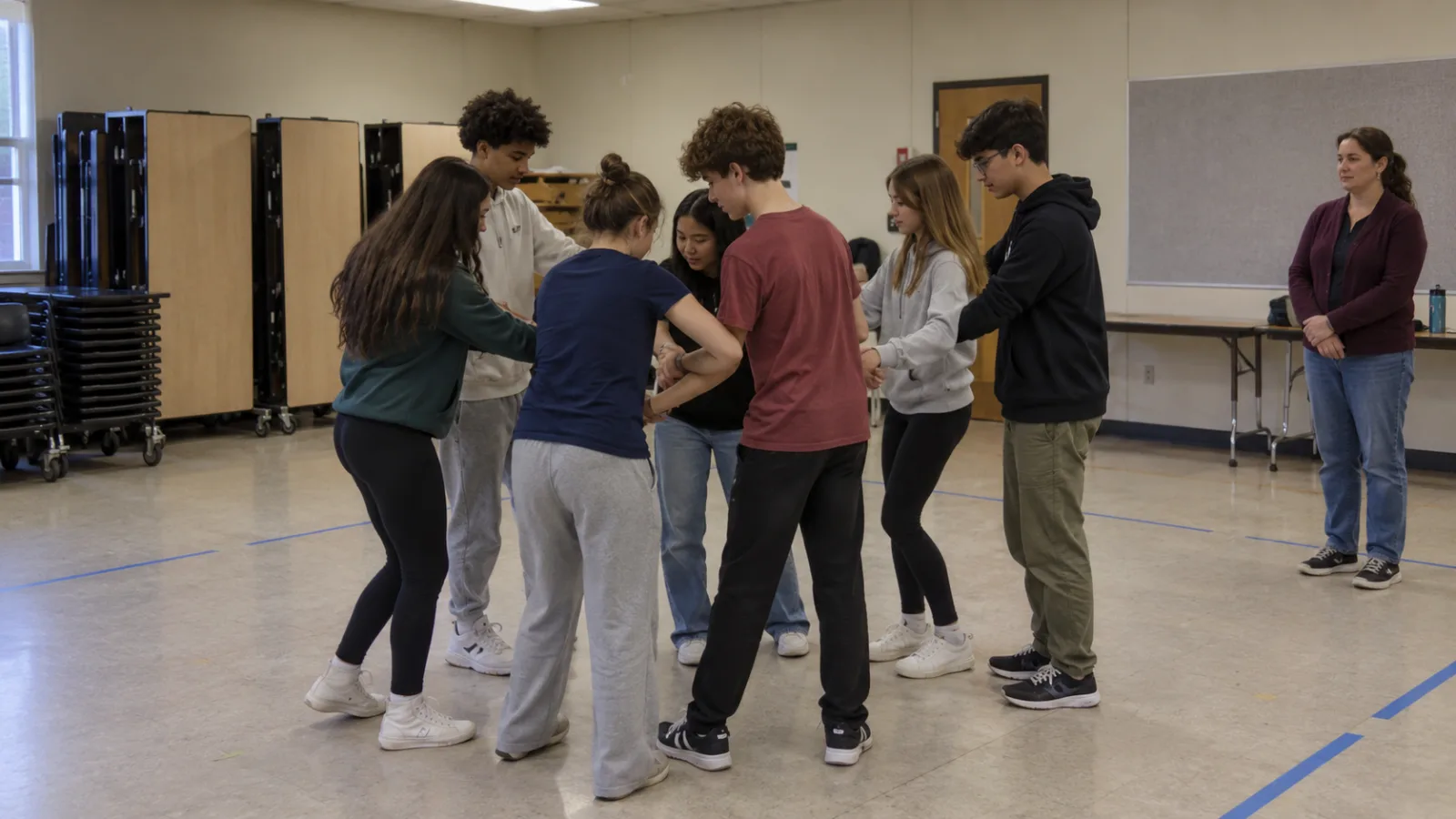
Choose one participant to be the caller. Instead of using a blindfold, have the caller close their eyes or face a wall where they cannot see the other players.
How to Play
- The caller begins counting slowly from ten to zero.
- Everyone else quietly chooses a corner.
- Players must stop moving when the countdown ends.
- Without looking, the caller selects a number from one to four.
- Everyone in that corner sits out for the next round.
- Remaining participants choose again.
- Continue until one player remains.
Facilitator Tip
Ask participants to walk rather than run. A smaller room does not provide enough stopping distance for a full sprint.
You can also revive eliminated players whenever the caller selects an empty corner. This prevents participants from remaining inactive for too long.
Inclusive Variation
Remove elimination completely. Assign each corner an answer, preference or action. Players move to the corner that matches their choice and complete a short challenge before returning to the center.
Examples include:
- Favorite game genre
- Preferred superpower
- Morning or evening
- Cooperative or competitive games
This version works especially well as an icebreaker because every participant remains involved.
2. Blanket Name Drop
Blanket Name Drop helps a new group learn names without turning introductions into a formal memory test.
Setup
Divide the group into two teams. Teams sit on opposite sides of an opaque sheet or lightweight blanket.
Two leaders hold the sheet vertically so neither team can see the other side. Each team quietly selects one player to sit or stand near the sheet.
How to Play
- Confirm that one player from each team is ready.
- The leaders lower the sheet together.
- The two selected players try to say each other’s name.
- The first correct answer earns one point.
- Raise the sheet and choose two new players.
- Continue until everyone has participated or one team reaches an agreed score.
Lower the sheet smoothly rather than pulling or throwing it downward. Players should remain far enough back that the material cannot hit their faces.
Facilitator Tip
Play a simple name circle before starting. The game is frustrating rather than fun when participants have never heard one another’s names.
For younger groups, allow teammates to provide one clue after three seconds.
Inclusive Variation
Instead of rewarding only the fastest answer, give both teams a point when both players remember each other’s name. This turns the activity into a shared memory challenge.
Participants who do not want to sit behind the sheet can help choose teammates, hold the score or give clues.
3. Human Knot
Human Knot is a communication and problem-solving challenge. Small groups must untangle themselves without releasing hands.
Because the game involves close physical contact, participation should always be optional.
Setup
Create teams of approximately six to ten players. Give every team enough open floor space and move them away from walls, furniture and other groups.
Before starting, ask whether everyone is comfortable holding hands. Provide a different role or activity for anyone who prefers not to participate.
How to Play
- Players stand in a circle.
- Everyone reaches one hand toward the center and takes the hand of someone across the circle.
- Players extend their second hand and connect with a different person.
- The group communicates and slowly begins untangling.
- Players may step over or duck under joined arms, but they should never pull.
- The challenge ends when the group forms one or more untangled circles.
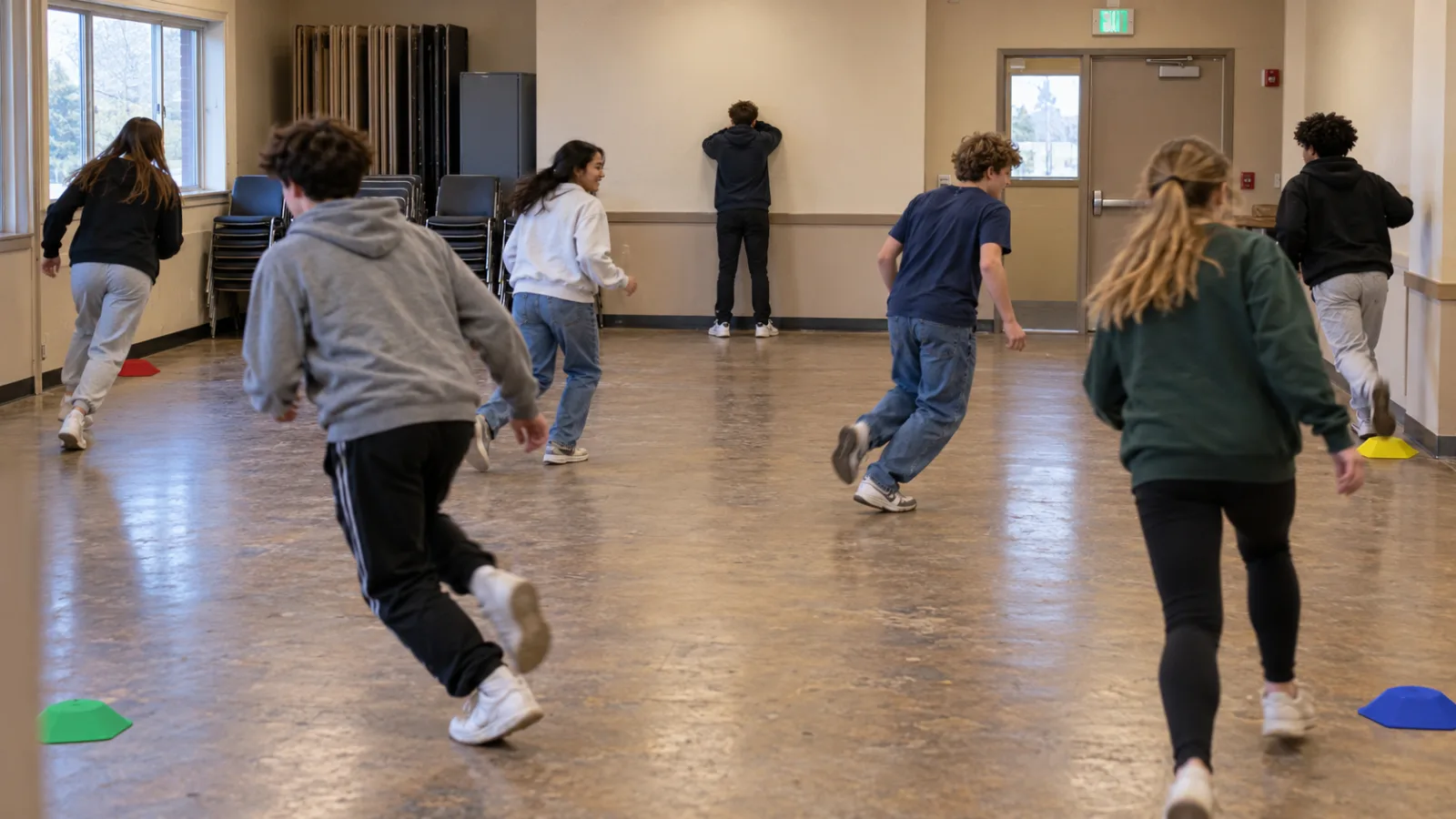
Not every starting knot has a perfect solution. A facilitator may allow one pair of hands to disconnect and reconnect when the group becomes stuck.
Safety Rules
- Move one person at a time.
- Do not lift other participants.
- Do not twist arms, wrists or shoulders.
- Stop immediately when someone says “stop.”
- Keep an adult facilitator outside the knot to supervise.
- Avoid using a speed-based competition.
Contact-Free Alternative
Use a Silent Line-Up challenge. Ask participants to arrange themselves by birthday month, height or alphabetical order without speaking.
It develops similar communication and teamwork skills without requiring physical contact.
Looking for more short collaborative activities? Our guide to morning meeting games includes Pictionary, memory challenges, word association and other flexible group options.
4. Sardines
Sardines reverses traditional hide-and-seek. One person hides first, while everyone else searches individually. Each player who finds the hiding place quietly joins it.
The final person to find the group becomes the next hider.
Setup
Define the searchable area before anyone hides. A leader should inspect it and identify all prohibited locations.
Do not allow hiding in:
- Lockable rooms or cupboards
- Bathrooms or changing areas
- Kitchens or storage rooms
- Elevated areas
- Equipment cabinets
- Spaces near electrical or heating equipment
- Locations where participants cannot stand or exit comfortably
At least one supervising adult should know the hider’s general location.
How to Play
- Select the first hider.
- Everyone else closes their eyes and counts to an agreed number.
- Players search individually or in pairs.
- Anyone who discovers the hider quietly stays nearby.
- The group grows as more players find the location.
- The final player to arrive becomes the hider for the next round.
Participants do not need to physically squeeze into one tiny space. Staying silently within a few steps of the hider is enough.
Facilitator Tip
Set a time limit and establish a recall signal. When the signal sounds, everyone must return to the starting point, even if the round is unfinished.
Inclusive Variation
Let participants search in pairs. Anyone who prefers not to hide can supervise the countdown, monitor boundaries or give a warm-or-cold clue after several minutes.
5. Balloon Gauntlet
Balloon Gauntlet is a team game in which players use foam noodles to keep lightweight objects airborne and send them across a central boundary.
For youth settings, we recommend lightweight beach balls or soft fabric balls instead of latex balloons. Uninflated and broken balloons can present a choking risk to younger children, while latex can cause allergic reactions.
Equipment
- Two to four lightweight beach balls or fabric balls
- One foam pool noodle for each participant
- Painter’s tape or cones for a center line
- Two clearly marked team areas
How to Play
- Divide the group into two teams.
- Place each team on one side of the center line.
- Introduce an equal number of balls on both sides.
- Players use their foam noodles to tap the balls into the air.
- Teams try to move the balls across the center line.
- Players may only touch the balls with the noodles.
- After one or two minutes, stop the round.
- The team with the fewest balls on its side wins.
Safety Rules
- Foam noodles may only contact the ball.
- Do not swing noodles above shoulder height.
- Leave enough space between participants.
- Stop play when someone enters the floor to retrieve equipment.
- Remove damaged equipment immediately.
- Check for latex allergies if balloons are used.
Inclusive Variation
Allow seated players to defend a marked zone or give them a shorter foam noodle. Another option is to place the balls on tables and have teams move them through a tabletop course.
How to Choose the Right Game
Choose the activity based on the purpose of the session:
- Learning names: Blanket Name Drop
- Quick energy boost: Four Corners
- Communication and teamwork: Human Knot
- Quiet suspense: Sardines
- High-energy team competition: Balloon Gauntlet
Consider beginning with a low-pressure game before moving into activities involving physical contact or competition. A new group may enjoy Blanket Name Drop, while participants who already know each other may be ready for Human Knot.
For younger participants, see our guide to games for eight-year-olds. For a quieter backup activity, these five card games for three players work well at small tables.
Frequently Asked Questions
What are the best indoor games for a large youth group?
Four Corners and Balloon Gauntlet scale most easily to large groups. Human Knot should be divided into teams of six to ten, while Sardines works better in a carefully controlled area with fewer participants.
Which indoor youth games require no equipment?
Human Knot and Sardines require no equipment. Four Corners can also be played without equipment when the room’s corners are easy to identify.
How long should a youth group game last?
Most energizers work best for ten to twenty minutes. End the game while participants are still engaged rather than waiting for every possible round.
How do you include participants with limited mobility?
Offer seated roles, use answer-based Four Corners, run a tabletop version of Balloon Gauntlet or replace Human Knot with Silent Line-Up. Participation should never depend on running or physical contact.
Is Human Knot suitable for every youth group?
No. Human Knot requires close contact and flexible movement. Use it only when participants consent and the space is suitable. Provide a contact-free alternative without asking anyone to explain their choice.
Is it safe to use balloons in youth games?
Latex balloons require careful supervision. Broken or uninflated balloons can be choking hazards, particularly for children under eight, and latex may trigger allergies. Lightweight beach balls or fabric balls are safer reusable alternatives.
How can elimination games remain engaging?
Use short rounds, allow eliminated players to return and give waiting participants active roles. Non-elimination versions are generally better when inclusion and continuous participation are the priority.
What should leaders check before playing Sardines?
Inspect the complete search area, prohibit unsafe and private spaces, establish a time limit and recall signal, and make sure a supervising adult knows where the first hider is located.
Final Thoughts
Successful indoor youth games do not need complicated equipment or lengthy explanations. Clear boundaries, short rounds and flexible participation matter more than elaborate rules.
Four Corners provides a fast energizer, Blanket Name Drop helps participants connect, Human Knot encourages communication, Sardines creates suspense and Balloon Gauntlet adds controlled movement. Adapt each activity to the room and the people taking part, and always provide a comfortable alternative.