In-Game Currencies: From WoW Gold to Digital Tokens
How did virtual gold coins inside an MMO spawn multi-billion dollar digital currency models? Here is an economic history of game money, virtual inflation sinks, black-market gold farming, and decentralized token economies
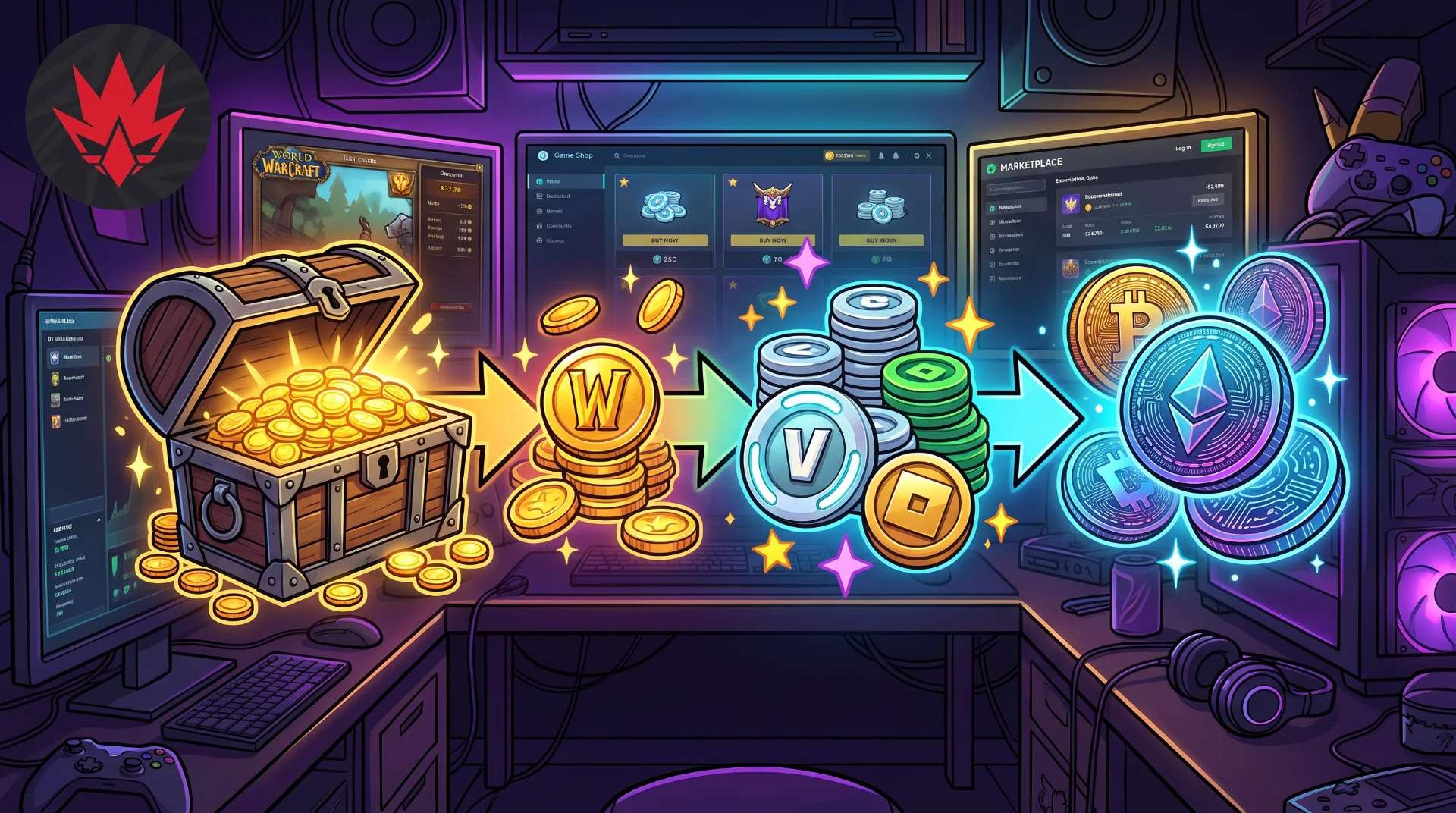
Synthetic Economies: How In-Game Currencies Reshaped Digital Finance
Long before modern digital currencies, decentralized ledgers, or fintech apps existed, millions of players were actively participating in digital economies governed by supply, demand, and monetary policy.
The proving ground for virtual finance was the early massively multiplayer online role-playing game (MMORPG). When titles like Ultima Online, RuneScape, and World of Warcraft introduced closed virtual economies, they inadvertently created real-world economic phenomena: hyperinflation, currency arbitrage, labor outsourcing, and underground currency exchanges.
Below is an economic analysis of how in-game currencies evolved from simple lines of server code into multi-billion dollar asset ecosystems.
The World of Warcraft Gold Standard: Managing Virtual Inflation
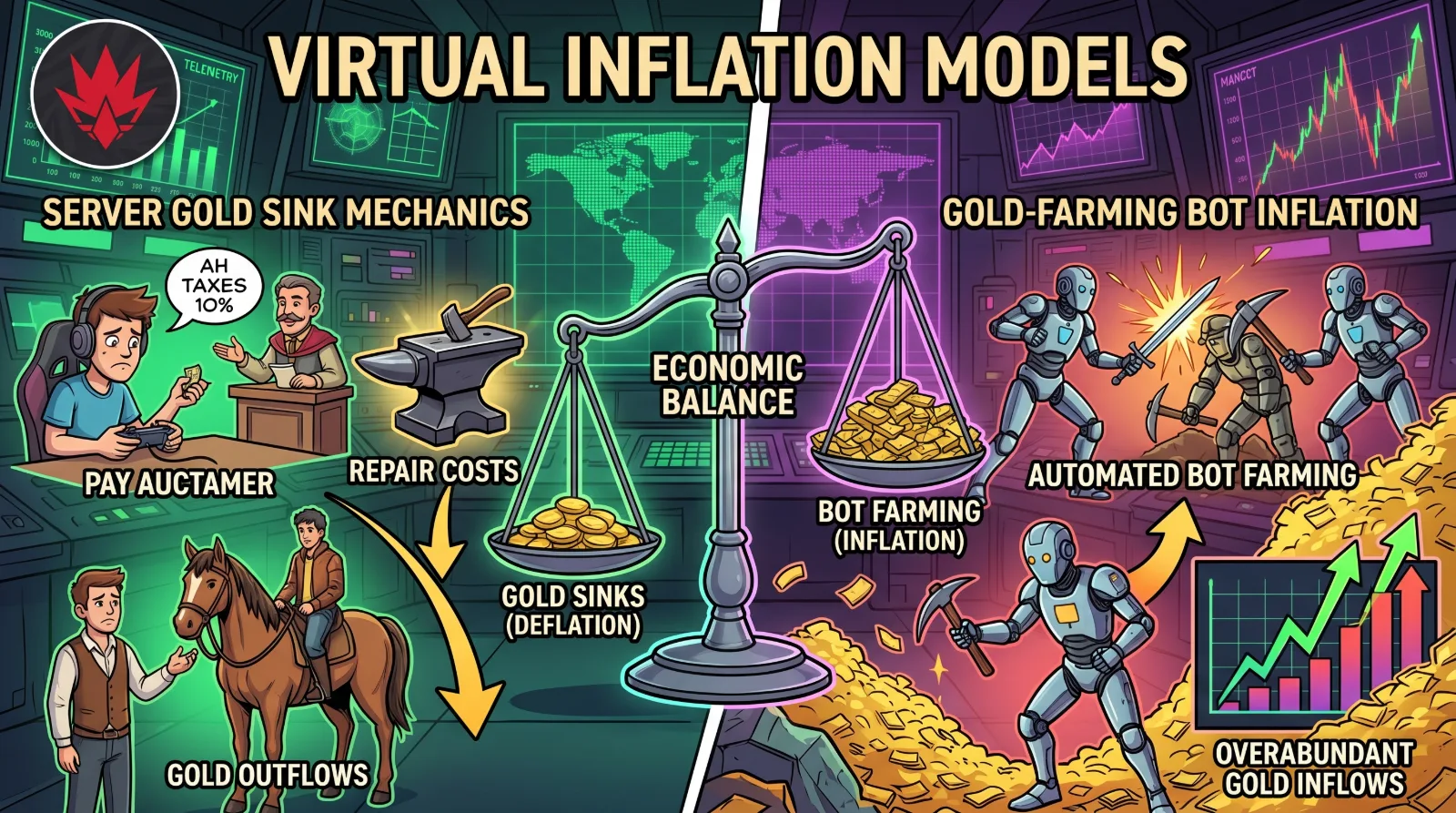
In a virtual world, money is literally created out of thin air every time a player defeats a monster and loots copper coins. Without active monetary policy, the money supply expands continuously, triggering runaway hyperinflation where basic items become unaffordable to new players.
To stabilize purchasing power, game designers engineered Gold Sinks:
MMO Monetary Balance Architecture:
[Money Faucets (Mob Drops / Quest Rewards)] ===> [Player Economy] ===> [Money Sinks (Repair Bills / Auction Taxes)]
- The Auction House Cut: Charging a permanent 5% transaction tax on player-to-player trades continuously burns currency out of active server circulation.
- Consumables & Durability: Equipment repair bills, flight path costs, and vendor crafting materials act as mandatory operational expenditures that drain liquidity from wealthy players.
The Gray Market: The Rise of Real-Money Trading (RMT)
Whenever an in-game asset requires time to acquire, a commercial market emerges:
- The Gold Farming Industry: In the mid-2000s, commercial operations established massive automated server bot farms, selling virtual gold to players for real-world fiat currency via underground websites.
- The Publisher Counter-Attack (The WoW Token): Rather than fighting an unwinnable battle against third-party sellers, Blizzard introduced the WoW Token in 2015. Players could purchase a token for real money and sell it on the in-game auction house for gold, bringing gray-market capital directly into the publisher’s balance sheet.
From Closed Databases to Decentralized Tokens
Today, in-game currency design stands at an architectural crossroads:
- The Premium Token Model (V-Bucks, Robux): Centralized corporate scrip. Users trade real fiat currency for closed digital tokens that can only be spent inside a single publisher’s storefront with zero reverse cashout liquidity.
- The Decentralized Token Framework: Utilizing public blockchain infrastructure to govern game currencies. Under this framework, in-game tokens can be settled through reputable cryptocurrency exchanges and Web3 platforms, allowing players to retain portable liquidity outside the game’s proprietary database.
As interactive entertainment converges with digital ownership, the lessons learned from decades of virtual game economics will serve as the blueprints for the next era of digital commerce