CS2 Skin Market Cap: How Counter-Strike Built a Multi-Billion Dollar Economy
Why do virtual pixels in Counter-Strike hold multi-billion dollar valuations? Here is an economic analysis of skin market capitalization, float scarcity equations, institutional skin funds, and digital asset liquidity.

Pixels into Capital: Deconstructing the Counter-Strike Skin Economy
In August 2013, Valve released the Arms Deal Update for Counter-Strike: Global Offensive, introducing cosmetic weapon skins and drop cases. What began as a novel cosmetic experiment has evolved into a global, multi-billion dollar digital asset market operating with liquidity comparable to traditional secondary commodities.
With rare Souvenir AWP Dragon Lores and Factory New Case Hardened Blue Gems commanding valuations exceeding $1,000,000, the market functions under established economic principles of artificial scarcity, float value distribution, and consumer trust.
Below is an economic breakdown of how Valve engineered an enduring virtual market cap, how institutional traders preserve capital, and why third-party settlement ecosystems drive the bulk of global liquidity.
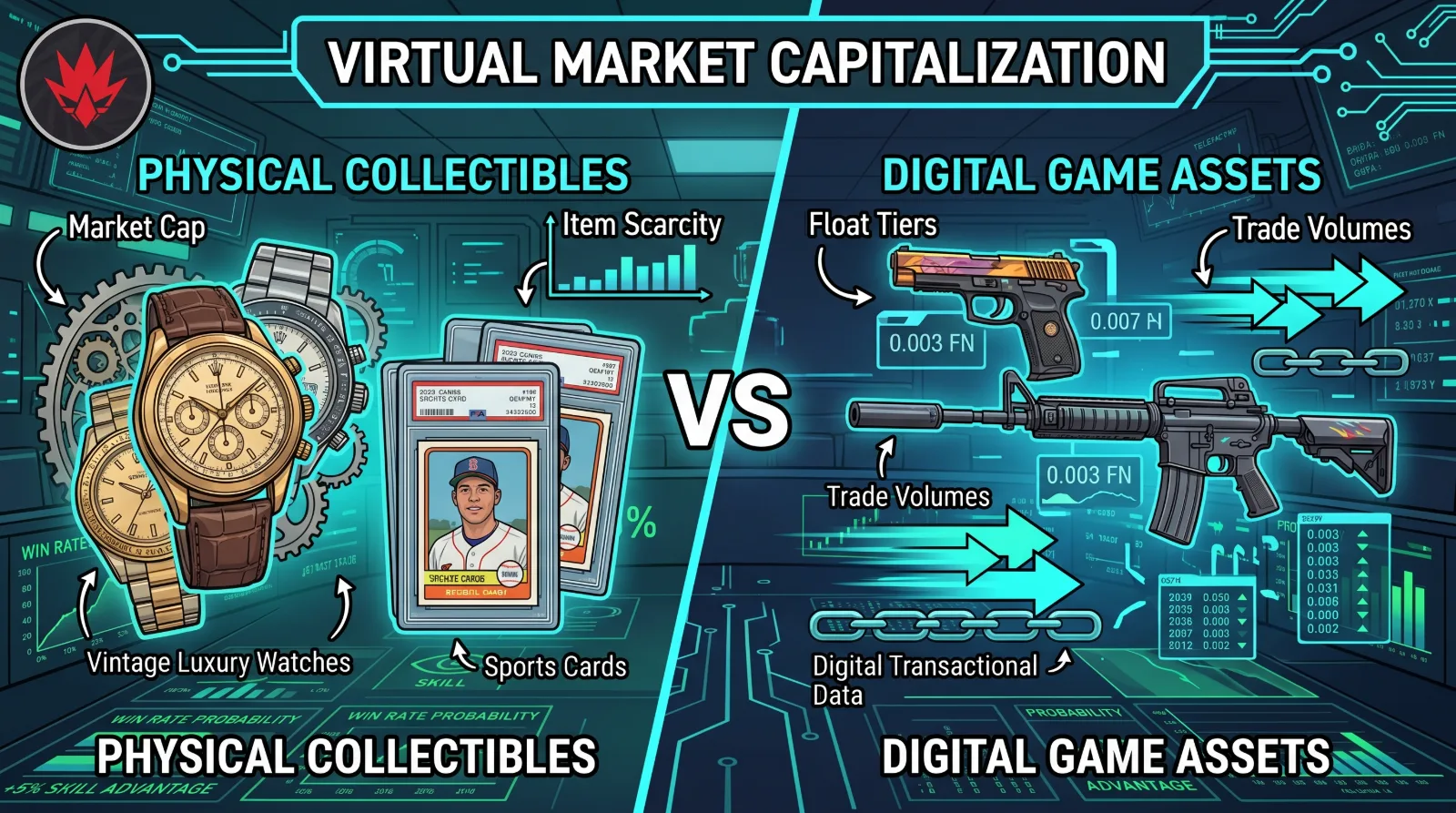
Supply-Side Mechanics: The Math Behind Scarcity
The valuation of any CS2 skin is determined by hardcoded drop probabilities:
Case Opening Probability Matrix:
[========================================= ] Mil-Spec (Blue): 79.92% Drop Probability
[=============== ] Restricted (Purple): 15.98% Drop Probability
[=== ] Classified (Pink): 3.20% Drop Probability
[= ] Covert (Red): 0.64% Drop Probability
[ ] Special Rare Knife/Gloves (Gold): 0.26% (1 in 385 Cases)
Beyond baseline unboxing odds, two mathematical modifiers dictate pricing tiers:
- The StatTrak Multiplier: A 1-in-10 chance (10%) applied to any opened item to track player kills, immediately applying a valuation multiplier to the baseline weapon model.
- Float Value Degradation: Wear is calculated via an immutable 64-bit float from
0.00to1.00. An item sitting below0.01float is exponentially rarer than an identical skin sitting at0.05, generating distinct pricing brackets for serious collectors.
Market Cap & Liquidity: The Steam Market vs. Third-Party Exchanges
Valve caps internal Steam Wallet balances to prevent capital flight, forcing high-tier volume onto secondary markets:
- The Capital Lockout: When an item trades on the native Steam Community Market, funds remain locked inside the platform ecosystem with zero fiat withdrawal options.
- Secondary Liquidity Rails: Independent trading hubs and reputable digital asset trading platforms fill this liquidity void, allowing collectors to deploy instant SEPA, e-wallet, or crypto payment channels to exchange virtual inventory for real-world purchasing power.
Is CS2 Skin Trading an Investable Asset Class?
While venture capital and private equity groups have quietly acquired portfolios of discontinued tournament sticker capsules (such as Katowice 2014 holos), virtual assets carry structural market risks:
- Centralized Regulatory Risk: Valve holds sovereign control over its database. A single policy adjustment—such as the introduction of trade holds or API restrictions—can disrupt market dynamics overnight.
- Capital Velocity: High-tier skins require willing private collectors, meaning liquidation times on seven-figure assets can span months unless sold at significant discounts to dedicated liquidity market-makers.