CS2 vs CS:GO: Gameplay, Visuals and Competitive Differences
A clear comparison of CS2 and CS:GO, covering Source 2, smoke interactions, competitive habits and the player experience.
CS2 vs CS:GO: Gameplay, Visuals and Competitive Differences
Quick answer: A clear comparison of CS2 and CS:GO, covering Source 2, smoke interactions, competitive habits and the player experience. This guide focuses on practical decisions readers can verify themselves, rather than promising shortcuts or repeating unconfirmed social-media claims.
Search results are crowded with brief answers and recycled advice. The useful question is what you should actually do next, what trade-offs matter and how to check whether the advice still applies. Below is a structured approach for players who want a dependable answer, not just a collection of keywords.
Why the transition matters
Counter-Strike 2 is the successor to Counter-Strike: Global Offensive, not merely a new set of weapon skins. It brought a technology transition and changes to how familiar situations look and feel. Veterans retain many transferable fundamentals, but some assumptions from older matches deserve retesting.
Source 2 and presentation
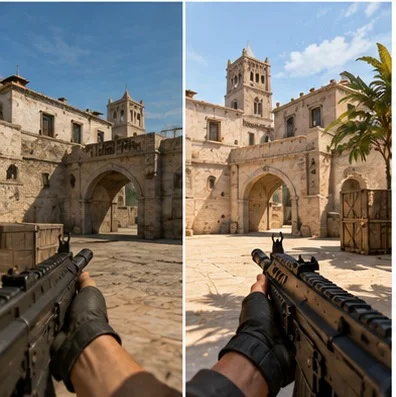
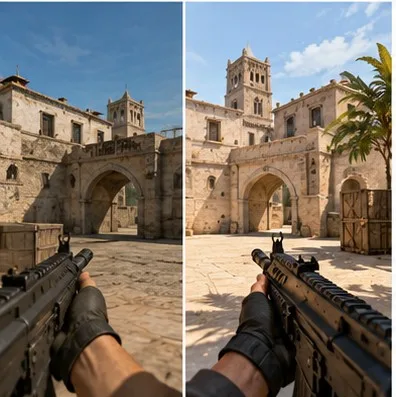
CS2 uses Valve’s Source 2 technology, with updated lighting, materials and presentation. These changes affect how players read spaces and recognize opponents. Improved visual fidelity does not automatically mean every player will prefer every graphical setting. Competitive players should prioritize reliable visibility on their actual hardware.
Smokes as interactive tools
One of CS2’s defining changes is its more dynamic smoke behaviour. Smoke interacts with the environment and can be temporarily affected by gameplay events. This makes utility timing and spacing more important to study rather than relying entirely on memorized CS:GO habits. Practice common site takes in the current game client.
Movement and shooting fundamentals
Counter-strafing, angle discipline and crosshair placement remain central skills. However, players sometimes perceive differences in timing and responsiveness across versions. Avoid treating every subjective feeling as proof of a particular technical cause. Use repeatable drills and recordings to isolate what you can improve.
Map familiarity versus map learning
Recognizable layouts can create false confidence. New lighting, visibility and utility interactions change how familiar corners play. Revisit basic clearing routes, flash timing and defensive positioning. Teams benefit from reviewing current demos rather than reusing an old playbook without testing.
The spectator experience
Modern broadcasts benefit from updated presentation and observer tools, while viewers still care most about readable action and tactical context. When evaluating a match, distinguish player execution from the production layer. Good analysis explains why a round succeeded, not simply how impressive a graphical effect looked.
What returning players should practice
Start with movement and recoil drills, then rehearse common utility on your preferred maps. Learn current callouts with teammates and verify that old lineups still work. Keep a short list of mistakes noticed in your first matches. The fastest adaptation often comes from focused practice, not from replacing every peripheral.
Which version should you learn today?
For someone entering the active Counter-Strike ecosystem, CS2 is the relevant modern starting point. CS:GO remains historically important for understanding professional eras and iconic matches. Study older footage for principles, but verify mechanics and tactical details in CS2 before applying them in competitive play.
Practical checklist before you finish
Use this three-part test: first, confirm the relevant information in the official game client or publisher documentation. Second, compare the advice with your own goals, hardware, budget or skill level. Third, record what actually changed after you applied it. A clear before-and-after comparison is more valuable than a dramatic claim without evidence.
If you are sharing the guide with friends, include the date you checked the information. Live-service games and digital storefronts change frequently, and an accurate answer today can become incomplete after an update. Whenever a menu, policy or schedule looks different, prioritize the current official interface over screenshots from an older guide.
Frequently asked questions
Is this advice suitable for beginners?
Yes. Begin with the fundamental steps, avoid optional complexity and make one change at a time. Beginners benefit most from predictable routines and clear definitions rather than advanced shortcuts.
Should I trust viral tips or settings?
Treat them as hypotheses to test. Popularity is not proof of accuracy, and an approach that works for one person may depend on their equipment, account, region or preferred playstyle.
How often should I check for updates?
Recheck whenever a relevant game patch, tournament announcement, platform-policy update or significant client change occurs. Avoid claiming that an old screenshot confirms a current feature.