League of Legends Clash 2026: Team Preparation Guide
Prepare for League of Legends Clash with a practical team checklist, drafting framework and reliable schedule-verification steps.
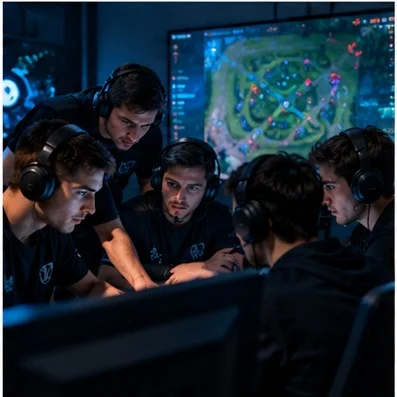
League of Legends Clash 2026: Team Preparation Guide
Quick answer: Prepare for League of Legends Clash with a practical team checklist, drafting framework and reliable schedule-verification steps. This guide focuses on practical decisions readers can verify themselves, rather than promising shortcuts or repeating unconfirmed social-media claims.
Search results are crowded with brief answers and recycled advice. The useful question is what you should actually do next, what trade-offs matter and how to check whether the advice still applies. Below is a structured approach for players who want a dependable answer, not just a collection of keywords.
What Clash offers
Clash gives groups of League of Legends players a structured tournament-style experience. The appeal is not only winning games but also practicing coordination under pressure. Eligibility, scheduling and event formats can change, so check the live client and Riot’s official announcements before treating any particular date as confirmed.
Confirm your team early
Agree on five players, preferred roles and realistic availability. Have everyone check the client for eligibility requirements and required setup. Avoid waiting until the last minute to resolve account issues. A simple shared message with start-time expectations can prevent more problems than an elaborate strategy document.
Draft around comfort and flexibility
A good Clash draft should give players champions they understand while preserving reasonable team composition. Prepare a few dependable choices for each role and discuss what happens when key champions are banned. Do not build the entire plan around a single surprise pick. Adaptability matters more than looking clever in champion select.
Build a communication system
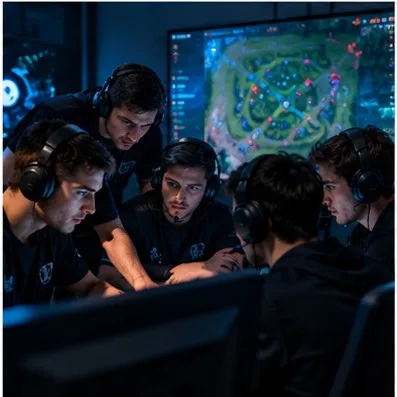
Decide who calls major objectives, who tracks summoner spells and how teammates communicate information during fights. Short, specific calls are easier to act on than overlapping commentary. Review one chaotic teamfight together and identify where the message became unclear. Better communication often produces immediate results without mechanical improvement.
Prepare objectives and side lanes
Before each game, discuss how your composition wants to win. A scaling team may value controlled farming and defensive vision, while an early-pressure lineup needs coordinated windows. Decide how you will approach dragons, Baron and side-lane waves. Clear win conditions help prevent five players from pursuing different plans.
Warm up without exhausting yourself
A short practice game or targeted warm-up can help players settle in, but marathon sessions immediately before a tournament can reduce concentration. Check hardware, voice chat and client updates early. Leave enough time for breaks and food. A calm, predictable routine makes it easier to execute decisions when games become stressful.
Review opponents responsibly
If tournament tools provide legitimate scouting information, use it to identify broad preferences rather than obsessing over every historical match. A player may have changed role or champion pool. Build a flexible ban strategy and keep backup plans. Treat scouting as a way to ask better questions, not as a guarantee of victory.
Learn from each match
After a game, identify one draft lesson, one macro lesson and one communication lesson. Avoid turning the review into personal blame. Keep the discussion short enough to prepare for the next opponent. Even a disappointing bracket can be valuable if the team leaves with clear, repeatable improvements.
Practical checklist before you finish
Use this three-part test: first, confirm the relevant information in the official game client or publisher documentation. Second, compare the advice with your own goals, hardware, budget or skill level. Third, record what actually changed after you applied it. A clear before-and-after comparison is more valuable than a dramatic claim without evidence.
If you are sharing the guide with friends, include the date you checked the information. Live-service games and digital storefronts change frequently, and an accurate answer today can become incomplete after an update. Whenever a menu, policy or schedule looks different, prioritize the current official interface over screenshots from an older guide.
Frequently asked questions
Is this advice suitable for beginners?
Yes. Begin with the fundamental steps, avoid optional complexity and make one change at a time. Beginners benefit most from predictable routines and clear definitions rather than advanced shortcuts.
Should I trust viral tips or settings?
Treat them as hypotheses to test. Popularity is not proof of accuracy, and an approach that works for one person may depend on their equipment, account, region or preferred playstyle.
How often should I check for updates?
Recheck whenever a relevant game patch, tournament announcement, platform-policy update or significant client change occurs. Avoid claiming that an old screenshot confirms a current feature.