PSA Grading Guide: Submission Costs, Turnaround Times & Step-by-Step Prep
Thinking of submitting your valuable Pokémon cards to PSA? Here is the complete step-by-step preparation guide, service pricing tiers, turnaround times, customs declarations, and middleman services.

The Road to Gem Mint: The Comprehensive Guide to PSA Card Grading
In the modern trading card landscape, third-party authentication provides decisive market trust. Founded in 1991, Professional Sports Authenticator (PSA) serves as the industry standard for evaluating, verifying, and encapsulating collectible cards. A card bearing the recognizable red-and-white PSA label commands the highest liquidity and premium pricing across international secondary markets.
For collectors looking to certify modern hits like Charizard ex or vintage treasures, navigating the submission process can present logistical questions regarding costs, turnaround times, and safe transit.
Below is an operational roadmap for preparing cards, choosing submission tiers, and submitting items for grading.
Direct Submission vs. Authorized Middleman Services
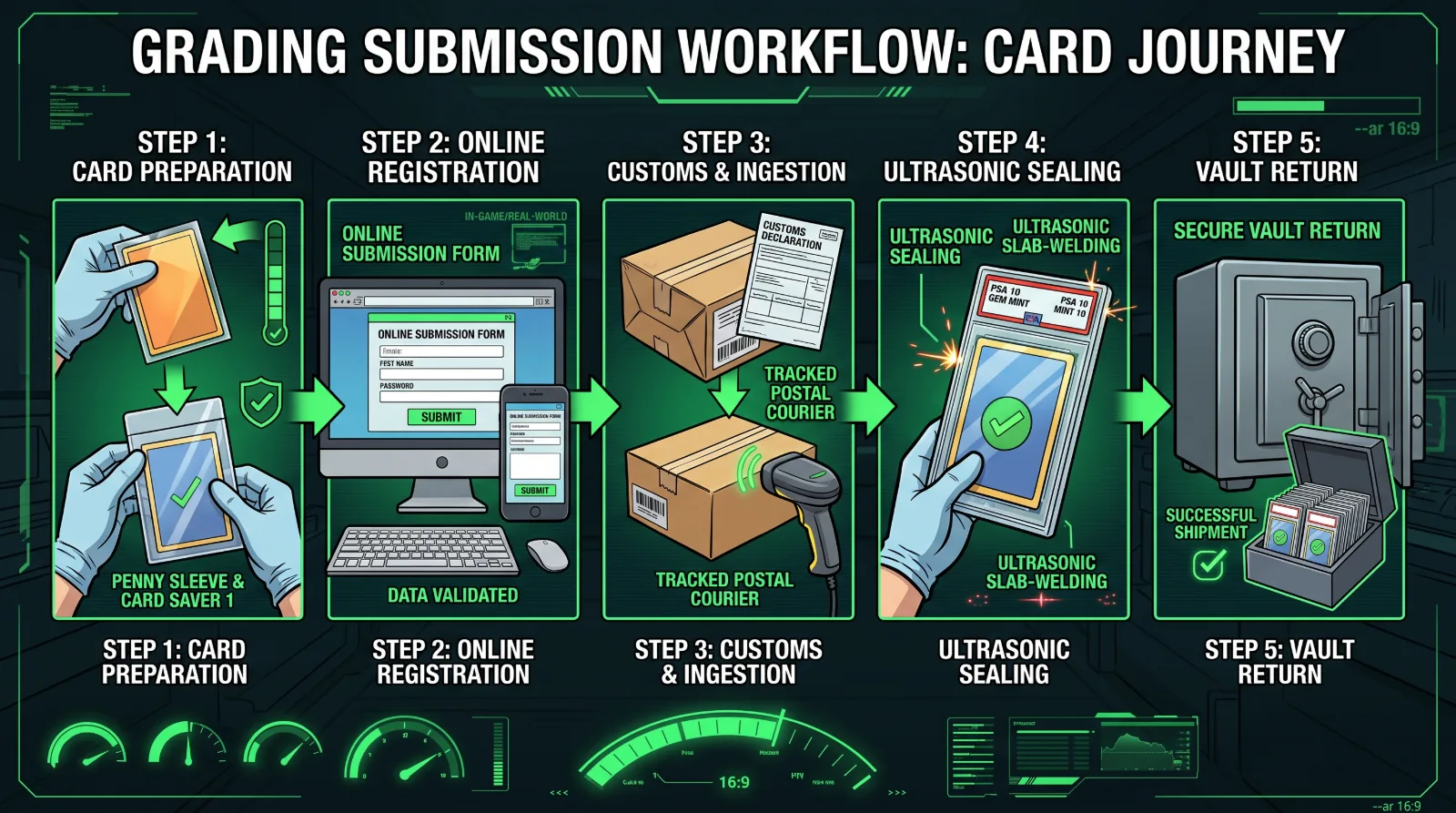
International collectors generally approach submissions through two primary avenues:
- Direct Submissions: You register a personal account via the official PSA portal, fill out digital customs manifests, and arrange insured international courier transit directly to PSA's intake facility in California. This route offers full tracking control for experienced high-volume submitters.
- Certified Middleman Hubs: You deliver your cards to an accredited local partner shop or verified submission service. The middleman consolidates cards into bulk shipments, manages international customs processing, and returns the sealed slabs to you upon completion. This reduces paperwork and customs friction.
The 4 Pillars of Card Evaluation
Before submitting candidates, inspect each card under clean lighting:
Evaluation Pillars:
Centering: Edge margin uniformity. For a PSA 10, the front face must fall within 55/45 to 60/40 alignment, while the back card face allows up to 75/25 tolerance.
Corners: Sharp, defined corners free of impact dings, fraying, or white pulp exposure.
Edges: Clean factory cuts free of chipping, indents, or handling friction.
Surface: An unblemished surface free of fingerprints, micro-scratches, foil pressure lines, or creasing.
Safe Packaging Protocols for Submission
Adhere to verified packing steps to eliminate transit damage:
Safe Submission Packaging Sequence:
[Card] ===> [Soft Penny Sleeve] ===> [Semi-Rigid Card Saver 1] ===> [Secured Between Cardboard Flutes]
Step 1 Cleaning and Sleeving:
Gently seat the card inside a clean penny sleeve. Avoid tight perfect-fit sleeves, as they can exert mechanical pressure on card corners during extraction.
Step 2 Card Saver Insertion:
Slide the sleeved card into a semi-rigid holder, such as a Card Saver 1. PSA explicitly recommends semi-rigid holders because authenticators can safely extract cards during intake without risking edge bends. Avoid rigid toploaders unless specifically instructed.
Step 3 Numerical Sorting and Cardboard Securing:
Arrange your cards in the exact numerical sequence listed on your digital submission invoice. Secure the stack between two rigid pieces of cardboard using rubber bands, ensuring the bands do not touch bare card edges.
Step 4 Insured Shipping:
Package the parcel with ample bubble wrap and dispatch it using tracked, signature-required shipping. Ensure declared shipping values match current market valuations.