GTA 6 Final Missions Leak Fact-Check: Debunking Viral Ending Claims & Video Scams
Is Rockstar's viral sweat system real? Here is an engineering breakdown of GTA 6's dynamic perspiration shaders, physical stamina tracking, fabric saturation maps, and Florida heat simulation.

Under the Florida Sun: Deconstructing the GTA 6 Dynamic Perspiration Engine
Whenever Rockstar Games releases a generational technological showcase, the community fixates on obsessive micro-details. Where Red Dead Redemption 2 amazed players with dynamic horse anatomy and real-time mud deformation, recent technical disclosures highlighted in Bloomberg’s reporting have driven massive interest toward a specialized visual achievement: GTA 6's Dynamic Sweat and Physical Exertion System.
Far from an arbitrary visual gimmick, this mechanic represents an advanced intersection of character shaders, atmospheric climate simulation, and physical stamina telemetry.
Below is an engineering analysis of how the RAGE engine calculates real-time perspiration, how tropical humidity alters fabric textures, and what it signals for next-generation immersion.
The Technical Foundation: Subsurface Scattering and Wetness Maps
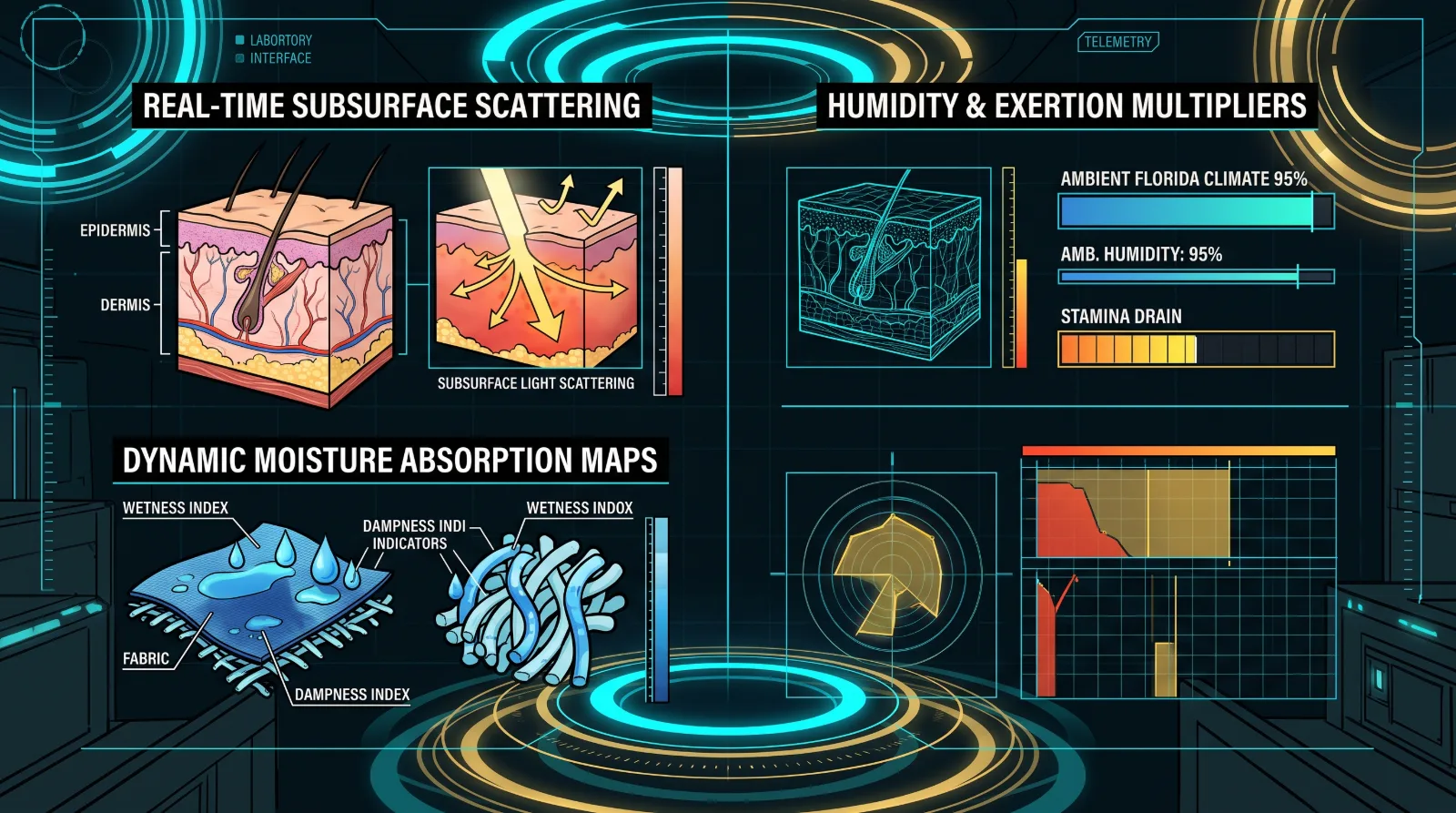
Human skin is translucent; light penetrates outer layers before scattering internally. Accurately rendering perspiration requires manipulating dynamic specular reflection maps in real time:
- Procedural Pores and Droplets: Instead of applying a flat shiny texture over character faces, the engine generates individual procedural droplet meshes that accumulate along natural physiological channels like temples, foreheads, and necklines.
- Light Refraction: Each droplet functions as a microscopic convex lens, refracting surrounding neon light fixtures and tropical sunsets realistically across skin contours.
- Gradual Evaporation: Moving from hot, humid outdoor marshes into an air-conditioned nightclub causes droplets to evaporate over several minutes, demonstrating persistent character state tracking.
Activity Triggers: What Causes Characters to Sweat?
Perspiration is tied directly to player behavior and environmental telemetry:
Perspiration Calculation Pipeline:
[Ambient Florida Heat + Humidity Index] + [Physical Exertion Rate] ===> [Dynamic Wetness Map Layer]
- Prolonged Athletic Sprinting: Engaging in high-speed foot chases across Ocean Beach elevates character heart rates, triggering rapid perspiration across exposed skin.
- High-Tempo Social Activities: Reports confirm that intense physical activities—including aggressive melee boxing, dancing inside crowded nightclubs, or sprinting through swamps—gradually elevate skin sheen.
- Fabric Saturation Maps: Wetness is not confined to skin. As perspiration intensifies, moisture bleeds realistically into clothing fibers. T-shirts and tank tops darken in high-contact areas like chest seams and underarms, with wet fabrics sticking to character anatomy through physical mesh simulation.
Immersion vs. Performance: Does It Affect Gameplay?
Players often wonder if physical perspiration introduces harsh survival penalties:
- Visual Storytelling over Punishment: Current disclosures confirm the sweat system is primarily an aesthetic and immersion achievement rather than a punitive survival stat. You do not need to constantly hydrate or wipe sweat away to avoid aim penalties.
- Emotional Resonance: Seeing Lucia or Jason covered in realistic grit, sweat, and road grime after escaping a four-star military response grounds the narrative stakes. Contrast this graphical fidelity with our analysis of GTA 6 chapter structures and storyline pacing.